Iwaso
みやじまの宿 岩惣- Say it
- ee·
wa· soh - Also written
- Iwaso Ryokan, Iwasou, Ryokan Iwaso Miyajima
About Iwaso
A ryokan in Momijidani, the maple valley behind Itsukushima Shrine, that began as a tea house in 1854. Its two large baths use hot-spring water; new-wing rooms and two of the cottages have a bathroom, and main-building rooms do not.
- OnsenYesIn the two large baths
- Bath in your roomNew wing and two cottagesBathroom; not hot-spring water
- Private bathNoneNone at the ryokan
- TattoosNot stated
- MealsDinner and breakfast in the dining roomsRoom-only on some dates
- Dietary needsAllergies, with 7 days' noticeNot fully allergen-free
- ChildrenWelcomeChild rates to age 12
- Check-in and dinnerCheck-in 15:00–19:30; out 10:00
- Getting thereFree pick-up at Miyajima pier
Good to know before you book
- Main-building rooms have no bathRooms in the main building have a toilet but no bath; guests there use the two large baths.
- Room baths are not hot-spring waterThe bathrooms in the new wing and in the Shukintei and Senshintei cottages are not hot-spring water; the hot spring is in the two large baths.
- The large baths close 9:30–15:00The two large baths are open from 15:00 to 9:30 the next morning, and check-out is at 10:00.
- Buildings
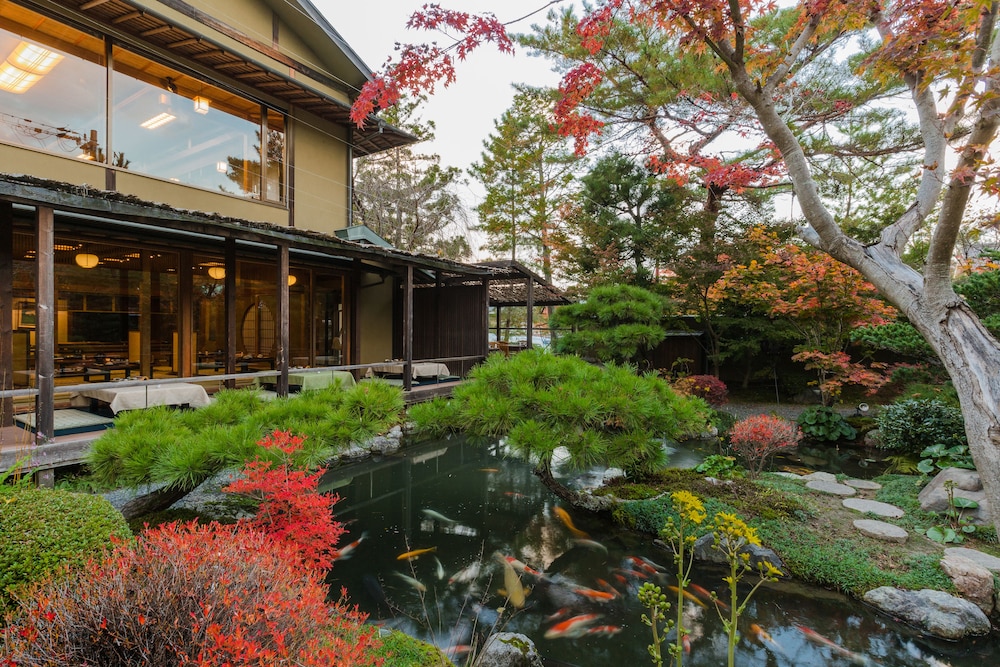
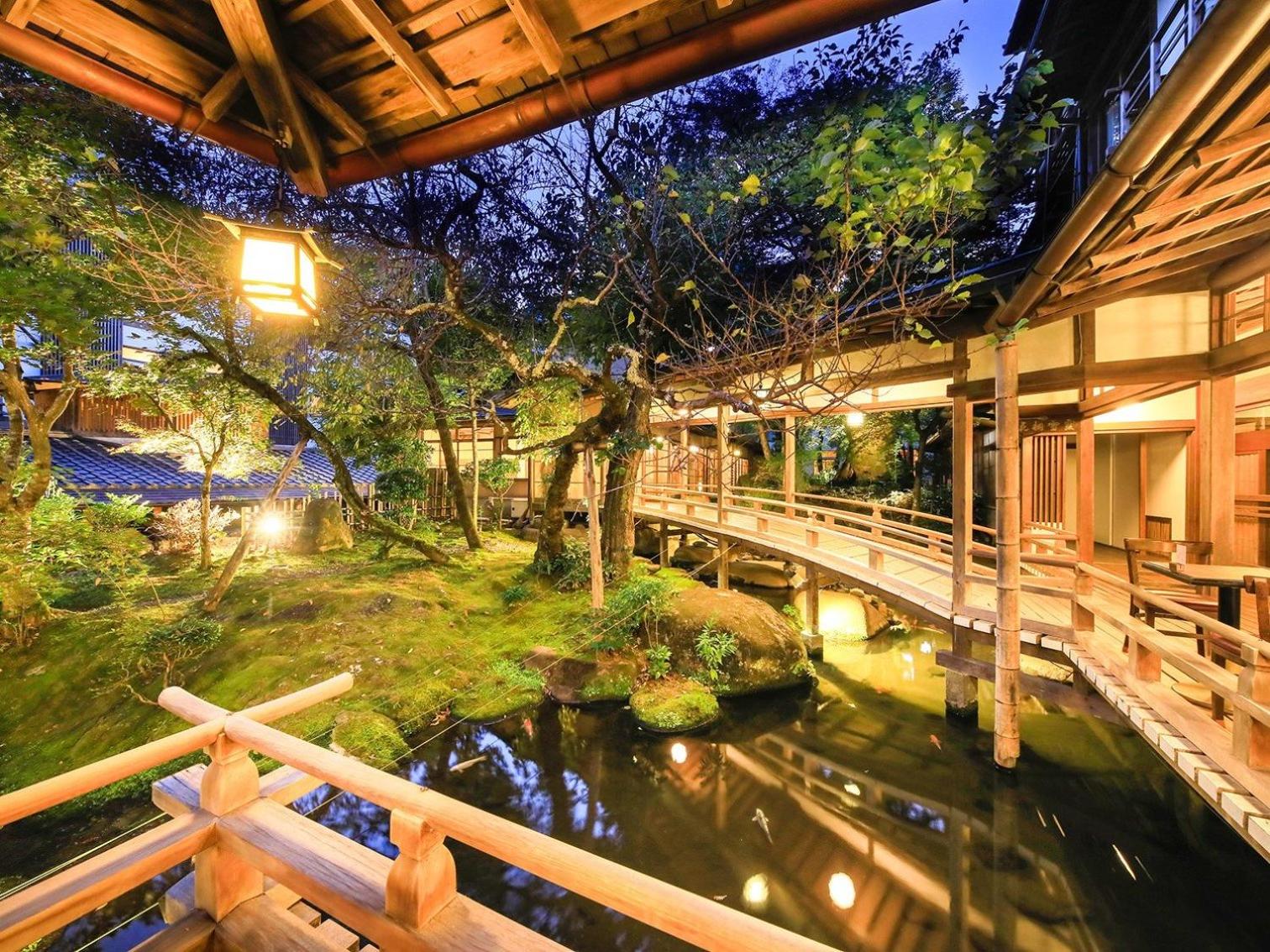
- An early-Showa wooden main building, a new wing and four detached cottages
- Large baths
- Two, each with an open-air bath; men's and women's swap night and morning
- Setting
- Momijidani, at the foot of Mt Misen, behind Itsukushima Shrine
- Founded
- 1854, as a tea house
Rooms and their baths
- Indoor bath
New wing, 10-mat room
Bath and toilet; not hot-spring water
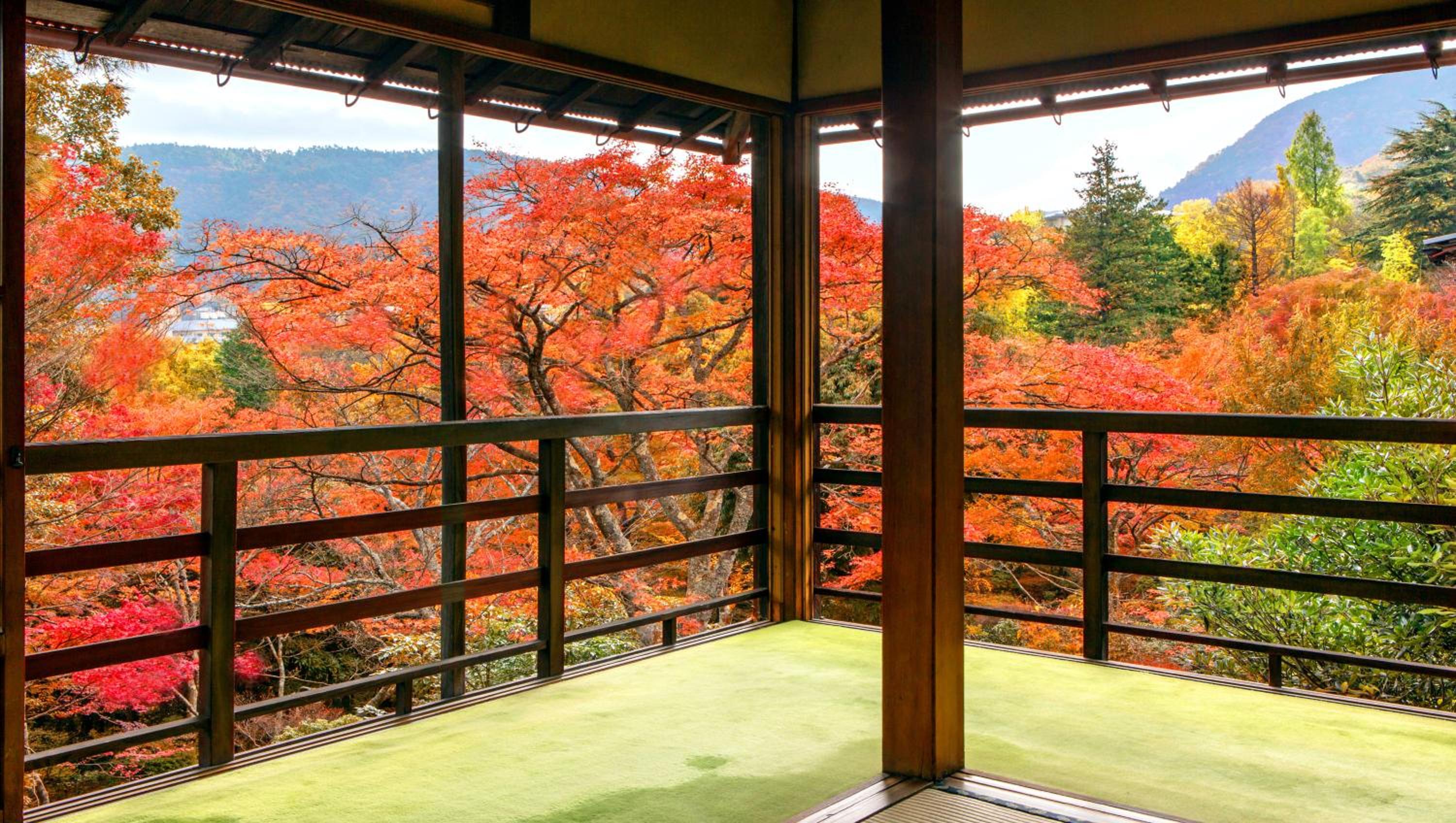
The new wing is step-free from the entrance to the rooms and looks over Momijidani to the Inland Sea
- No room photos yetIndoor bath
New wing, corner room of two 10-mat rooms
Bath and toilet; not hot-spring water
- No room photos yetIndoor bath
Cottage Senshintei
Private bathroom; not hot-spring water
Detached cottage
- No room photos yetIndoor bath
Cottage Shukintei
Private bathroom; not hot-spring water
Detached cottage
- Shared baths
Main building, 10-mat room
No bath in the room (toilet only); use the two large baths
Early-Showa wooden architecture
The fine print
Last checked November 12, 2026.
- Onsen
Yes. Hot-spring water in the two large baths
A weak radioactive cold spring, heated and with water added (Ikyu); rare on Miyajima.
- Bath in your room
Some rooms. A bathroom in the new wing and two cottages, not hot-spring water
Main-building rooms have a toilet but no bath.
- Private bath
None. None
- Tattoos
Not stated. Not stated by the ryokan
- Meals
Included with some stays. Dinner and breakfast in the dining rooms; room-only on some dates
Kaiseki with Hiroshima oysters and conger eel, or wagyu sukiyaki. You can't choose the dining room, and island restaurants close early.
- Dietary needs
Some diets. Allergies, told 7 days ahead; not allergen-free
Ingredients are swapped, but kitchen and washing aren't separate. Other menu changes for personal preference aren't made.
- Children
Welcome. Welcome, with child rates to age 12
With two adults: ages 0 to 1 ¥2,200 (no meals or futon); 2 to 6 half price with a children's dinner; 7 to 11 30% off with a shorter adult dinner.
- Check-in and dinner
Check-in 15:00 to 19:30, check-out 10:00
Ferries from Miyajimaguchi thin out after 18:30.
- Getting there
Free pick-up at Miyajima pier; call with your ferry time
8:00 to 20:00, by phone only (+81 829-44-2233), not email. 15 minutes on foot, 5 by car. No pick-up from the airport or JR stations.
Meals
- Dinner
- Kaiseki with Hiroshima oysters and conger eel, or a wagyu sukiyaki kaiseki; 18:00–19:30
- Sukiyaki dinner
- Starter, hassun course, sashimi, a seasonal dish such as grilled oysters, sukiyaki, rice, soup and fruit
- Breakfast
- Japanese breakfast, 8:00–8:30
- Dining rooms
- Dinner and breakfast are served in the dining room Momiji or the Dining room; the ryokan assigns it and guests can't choose
- Stays without dinner
- Offered on some dates; the ryokan notes that restaurants on the island close early
Baths
- Large baths
- Hinode no Yu and Tsuki no Yu, each with an indoor and an open-air bath; open 15:00–9:30; men's and women's swap night and morning
- Water
- Hot-spring water from a weak radioactive cold spring, heated and with water added
- Private bath
- None; the ryokan has no bath to reserve
- Bath in the room
- New-wing rooms and the Shukintei and Senshintei cottages have a bathroom, not hot-spring water; main-building rooms have a toilet only
- Sauna
- None
Getting there
- Train
- Shinkansen to Hiroshima (3 hours 47 minutes from Tokyo, 1 hour 31 minutes from Kyoto, 1 hour 15 minutes from Shin-Osaka), then on to Miyajimaguchi and the ferry
- Pick-up
- Free car from Miyajima pier, 8:00–20:00. Phone the ryokan on the day once you know your ferry time; it is 5 minutes by car or 15 on foot
- Ferry
- Ferries from Miyajimaguchi thin out after 18:30
- Car
- About 10 minutes from the Hatsukaichi or Ono interchange to Miyajimaguchi pier
- Parking
- 5 spaces on the island, where roads are narrow; most guests park at Miyajimaguchi on the mainland
Who it suits
- Suits
- A night on Miyajima to see Itsukushima Shrine in the evening and early morning; autumn-leaf trips; families, with child rates to age 12
- Less suited
- Guests who want a private bath to reserve, which the ryokan does not have; main-building rooms have no bath of their own
Place and season
- Autumn
- The maples of Momijidani, which means "maple valley"
- Through the year
- The ryokan lists new green, the cool stream, autumn colour and winter quiet
History
- 1854
The founder, Iwakuniya Sobei, bridges the Momiji river and opens a tea house.
- Early Meiji era
The tea house becomes a ryokan.
- 1892
The entrance house is built.
- Early Showa era
The wooden main building dates from this time.
- 1981
The lobby is built.
Ryokan elsewhere to compare
Nanzenji, Kyoto
Kyoto Garden Ryokan Yachiyo
Also serves dinner in a dining room and has a bath in every room, in Kyoto instead of Miyajima, at about the same price.
Shuzenji, Izu
Arai Ryokan
Also has rooms with their own bath, in Izu, another seaside destination, at about the same price.
Gora, Hakone
Gora Kansuiro
Also serves dinner in a dining room and has rooms with their own bath, in Hakone instead of Miyajima, at about the same price.
Questions
Does Iwaso have a hot spring?
Yes. The two large baths, Hinode no Yu and Tsuki no Yu, use hot-spring water from a weak radioactive cold spring, heated and with water added. Each has an open-air bath, and they are open from 15:00 to 9:30.
Do all rooms at Iwaso have a bath?
No. New-wing rooms and the Shukintei and Senshintei cottages have a bathroom, which is not hot-spring water. Main-building rooms have a toilet only, so guests there use the large baths.
Can I reserve a private bath at Iwaso?
No. The ryokan has no private bath to reserve; guests use the two large hot-spring baths.
How do I get from the ferry to Iwaso?
The ryokan's car collects guests free at Miyajima pier between 8:00 and 20:00. Phone the ryokan on the day once you know which ferry you are on. The ride takes 5 minutes; on foot it is 15.
Where are meals served at Iwaso?
Dinner and breakfast are served in one of two dining rooms, Momiji or the Dining room. The ryokan assigns the room. Dinner runs 18:00–19:30 and breakfast 8:00–8:30.
How late can I check in at Iwaso?
Check-in is from 15:00 to 19:30. Ferries from Miyajimaguchi thin out after 18:30, and the pier pick-up runs until 20:00.